At the Close of Chanukah, Canada’s Jewish Question Remains Key

At the risk of beating a clearly not quite yet dead horse, I need to talk about the relationship between the Canadian Jewish community and the current government. For those playing the home game, I’ve penned some critical/emotional analyses a few times before:

Most recently about the Conservative government’s use of public funding to target the Jewish community with a partisan smear campaign against the Liberals.

Earlier, about the Toronto Star’s examination of Harper’s Identity based Politics and the dangerous precedence it sets.

During last year’s election, I wrote about and critiqued the sudden shift in voting trends among Jews in my home riding of Thornhill.

And then I followed that up with my astonishment at the Thornhill Jewish community’s support of MP Peter Kent solely on the basis of how much he “supported” Israel.

Personal politics aside, the increase in institutional association between the Jewish community and the Conservative government has troubled me. I felt (and do now, to an even greater extent) that the government was stepping vastly out of its bounds in creating a political environment predicated on religious identity. And I was (and am now, to an even greater extent) dismayed with much of the Jewish community’s myopic predilection to support whichever Canadian politician was more vocal in support of Israel.

I’ve taken some flack for these arguments, which is understandable. As I’ve thought about it more and reflected on what I’ve written, I also admit that a few times I may have conflated the Thornhill/Toronto Jewish community with the greater Canadian Jewish community. They are not one and the same. However, in much the same way that the pulse of the American Jewish community can be felt in New York, you can get a sense of the state of the Canadian Jewish community by scrutinizing Toronto and Thornhill (and to an extent, Montreal).

Which bring us to this week’s observance of Chanukah, a celebration of Jewish independence against political and religious oppression by the state. How appropriate.

Canada’s newspaper of record, The Globe and Mail (which I should note is a centrist/moderately conservative paper in political alignment), recently published an article by Gerald Caplan on the very same issue I’ve been harp(er)ing on for over a year: What exactly is it with Stephen Harper and the Tories’ obsession with the Canadian Jewish community?

Caplan is quick to note that “it wasn’t always this way.”

You should read the article. It provides a broader context to the current state of affairs and sheds a little more light on the issue than has been covered by the pundits. It’s certainly more revealing than anything you’ll see in the Canadian Jewish media. A short excerpt:

“Why is this Conservative government so determined to woo Jewish support? Why is it so reflexive, so mindless, in its support for Israel? Given their single-minded pursuit of ethnic voters, politics seems a more plausible explanation than conviction. Yet Jews constitute only 1 per cent of the Canadian population and are a factor in only a tiny number of seats. Most Jews vote Liberal and while some have defected to the Conservatives over Israel, most still will. So the unseemly Conservative embrace just doesn’t add up.”

And what about the reflexive Jewish embrace of the Conservatives?

Last week, the Orthodox Union and NCSY created an award, the “Outstanding Award of Merit,” and bestowed it upon Stephen Harper. As reported in the Canadian Jewish News article covering the event, Harper received the award due to him being “a role model for all Canadians.” Well he is the Prime Minister, isn’t being a role model to Canada kind of his job? Shouldn’t getting to be the PM be his reward? According to Rabbi Glenn Black, the CEO of NCSY, and a gentleman I once conducted a personal interview with on the state of Canadian Judaism, Stephen Harper is worthy of this recently invented award

“because of his consistent support of the Jewish community… There has never [before] been a prime minister… who has been steadfast in their support of righteousness and freedom… Israel is a lone democracy in a sea of hatred… [Harper] understands his role is to stand up against the power of evil.”

Well there you have it, folks. According to the largest Jewish movement in Canada, the barometer for how “Outstanding” and “Merit”orious a Prime Minister you are is how much you support Israel.

But wait! Lest we conflate support of Israel with support of the Jewish community (something nobody would ever do, right?), along comes Jason Kenney, Minister of Citizenship, Immigration and Multiculturalism, who said to the crowd: “We’re… proud to be part of a government that has taken a zero tolerance approach towards anti-Semitism.” One can rightfully assume that Kenney’s comment was in reference to the CPC’s misguided belief that the Liberals somehow have a less-than “zero tolerance” approach to antisemitism. What, do the Liberals oppose some forms of antisemitism?

(As a humourous aside, I should note that a search of www.ou.org for “Outstanding Award of Merit” only links to an article about cookie recipes for Pesach. Could it be that the OU’s headquarters know that this is ultimately the bestowal of empty platitudes in an attempt to crawl further into bed with the government?)

For a moment, let’s set aside the fact that given Canada’s diminishing role in international affairs, no single party can claim the highest level of support for Israel (whatever that means). Let’s also momentarily dispense with the fact that, as Caplan noted in his Globe article, “by any conceivable standard, we Canadian Jews are surely among the most privileged, most secure, most successful, most influential minorities in Canada and indeed in the entire world.” Having rid ourselves of the weightiness of these actualities, we’re left with two resounding questions:

Even if one political party could claim greater support of Israel and the Jews, should they?

And should the organized Jewish community jump into bed with a domestic political party solely on the grounds of a single yet nuanced and complex foreign affairs issue?

As I’ve noted before, I believe the answer to both questions is a loud “no!” Truly, we must not allow for the blind conflation of religious beliefs and political voting patterns. In Canada, the line between Synagogue and State is being dangerously blurred. It’s clear others agree with me, and are starting to be a little more vocal. If you’re not convinced yet, let’s use the Chanukah narrative to learn a little more.

Our observance of Chanukah instructs us that we need to resist government intervention in matters of private and communal religious life. It also teaches us we need to be weary of those within our community who rush to support political parties for the sake of short-term gains. Let’s not forget that the war wasn’t just an external one against Antiochus, it was also a civil war within the Jewish community. As Adam Bronfman at Jewcy writes:

The Jews at the time of the Maccabees were struggling with how much influence they should allow from the Hellenistic culture which surrounded them… In this regards the story also tells a tale of oppression from within. Some Jews were assimilating completely into the Hellenism of the dominant culture…Chanukah is a tale of Jewish struggle, demonstrating both the internal and external battles our community has contended with.

I recall hearing a rabbi say once that while the institutional separation of synagogue and state needs to be closely guarded, politics and religion can enjoy a more nuanced and symbiotic relationship. The Maccabees were surely aware of this. Are we?
Sad Canadians

Wasn’t this the party that campaigned on a platform of transparency, accountability, and a promised end to government scandals?

Whether you call it cowardice, obstruction of justice, a brilliant political move, or an exercise in partisan smugness, Stephen Harper’s refusal to take any responsibility for the Afghan detainee scandal on the part of the ruling Conservatives is, at the end of the day, just sad.

In the face of overwhelming evidence suggesting that this has been a long known issue, it looks like Harper might pull out the prorogation card again. So call this whole sad issue whatever you want, but ultimately one thing is clear: for Harper and his Conservatives, when confronted with unbelievably difficult issues involving ethics, political ramifications, and basic human sanctity, they would rather run and hide rather than dealing with them like mature adults.

What would a mature adult do? For one, they should probably read this:

Power, Money, & Privilege

A dangerous cocktail.

The Tories used their MP’s free-mail privileges to send flyers to households in communities with large Jewish populations in Montreal, Toronto, and Winnipeg. These flyers (see one here) were an attempt to convince voters (is there an election brewing?) that the Conservative Party is more committed to Israel – and thus, by extension, the Jewish population of Canada – than the other political parties. This is astonishing. On many levels:

1. This is an abuse of taxpayer funding. These flyers were sent for free, under postal rules allowing MPs to send mail to their constituents in the interest of public information. But this is not information being sent, it is narrow-casting propaganda that in fact misinforms (see my third point) the populous. These are essentially attack-ads being funded by public dollars. Would this be acceptable during an election?

2. This is also a fiscally unsound abuse of taxpayer funding. Could the Tories at least be economically frugal with their propaganda? A report issued this week by the Globe and Mail notes that, while MPs of every party make use of free mail privileges, the Conservatives spent $6.3-million on the mailers last year, while opposition MPs spent $3.8-million. What happened to the Tories’ self-professed “fiscal accountability”?

3. In a strange world, this might all be acceptable were the information included in the flyers in fact true. One might excuse Tory MPs for spending millions of dollars on informing the Canadian public that the Toronto Maple Leafs are having a terrible season and there should be an appropriate public response. But the accusations leveled here are just incredible. Quite literally, they are not credible. The ad argues that:

A) Canada’s presence at the Durban Conference in 2001, under the leadership of the Liberals, was an indicator that the Grits are complicit in foreign anti-semitism. In reality, the Israeli government at the time specifically asked the Canadian delegation to remain to “make its voice felt and bear witness to what was happening,” noted Liberal MP (and former Minister of Justice and current Jewish luminary) Irwin Cotler.

B) The Liberals are soft on fight terrorism, and they “opposed defunding Hamas,” and “asked that Hezbollah be delisted as a terrorist organization.” In reality, it was the Liberal party in 2002 that had Hamas and Hezbollah classified as terrorist organizations. Moreover, it was the personal musing of a Liberal MP who wondered if Hezbollah might be delisted. While reprehensible, that personal musing cannot be taken to be a party stance of the Liberals, as MP Joe Volpe argues.

C) The Liberals do not support Israel, as Michael Ignatieff accused Israel of committing war crimes in 2006. While Iggy did indeed did make this accusation once during the war against Hezbollah, he later publicly apologized. So accuse him of flip-flopping if you want, but don’t make this false corollary. Even if Israel committed war crimes, that doesn’t mean saying so lessens support of the country, it’s just an analysis of military strategy. This is just misleading and playing to people’s emotions.

At the end of the day, I’m floored that this abuse of power, money, and privilege took place. MP Cotler, eloquent in his shock, noted that “this goes beyond the pale of politics, this is an abuse of privilege and … I will call I what it is, it’s a lie … this stuff is scurrilous.”

I’m just saying, is all…

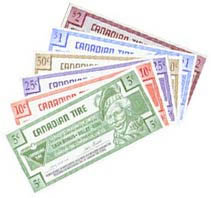
canadiantire1Remember during the past few weeks of political turmoil when Stephen Harper repeatedly insisted that what Canada really, really needed during “the most difficult global economic crisis in many decades” was stability — a stability only Harper’s Conservative government could provide?
Yeah, I remember that, too.

My how times have quickly changed, haven’t they Mr. Harper? Maybe I should be a little more sympathetic… I guess it’s pretty hard working to stabilize our country from the front seat of the roller coaster ride you’re leading Canada on.

After all, the zigzaging, pessimism, and uncertain depression might just be the side-effects of riding on this coaster.

Except these aren’t side-effects… they’re effects. I’m a flat-out dunce when it comes to math and money, but even I can see that Harper’s not exactly cultivating a sense of economic stability. Because I’m a little dyslexic when it comes to the math side of economy, I’ll refer you to some brilliantly damning words from Doug McArthur:

[the current goings on is an] indication of really how kind of badly organized they are right now. It’s funny that a government who has prided itself — at least so they say on controlling the message and keeping the message controlled out of Prime Minister’s office — has perhaps done worse than any other government I can remember in terms of messaging about the state of the economy and I think this is bad for the economy. I think to have inconsistent messages, constantly changing messages, an apparent failure to understand what’s going on in the economy with that is a bad thing in terms of the overall all the actors in the economy.

If you need a good primer on why Harper is an impediment to stability and democratic clarity, I highly suggest you check out the full article at the Globe. It’s worth it.

Contempt: Simply Stated

For some of us, looking at the past week’s events is actually quite a simple matter. Painful, but simple.

While faring much better than the rest of the world, Canada is indeed confronted with a worsening economic situation. And in the midst of this crisis, immediately following a campaign predicated on restoring stability and workability, Stephen Harper and the Conservatives have shut down Parliament. They have flatly rejected the concerns of the majority of the elected officials, and shown themselves to be incapable or unwilling to engage in civilized discourse.

The Toronto Star’s Carol Goar surrounds her dismay with quirky and effective rhetoric:

“The Prime Minister whom voters re-elected seven weeks ago to provide a ‘firm hand on the wheel,’ seized the first opportunity to veer wildly into the oncoming lane, gambling that he could damage his adversaries more than he hurt himself.

Stephen Harper miscalculated. He is now struggling to save his discredited government.”

Worst of all – Harper’s given our elected officials a two month paid vacation from their jobs during which he will no doubt spend an exorbitant amount of funds on anti-coalition propaganda. Fiscal responsibility? Economic stability? Productive parliamentary discourse? Are we truly going to sit back for two months while this goes on?

Is there a Doctor in the House?

Do the Conservatives pledge a hypocritic oath when they take office? You might assume so, given this juicy item emerging from the dark pages of parliamentry history…

“Bloc part of secret coalition plot in 2000 with Canadian Alliance”

You might also assume that they take such an oath given what Harper had the gall to say yesterday. These were his words:

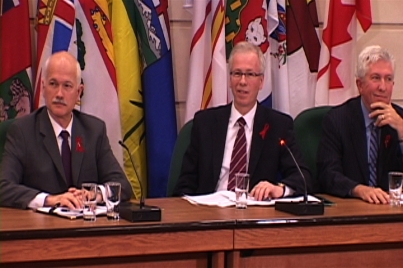
presser-62“Mr. Speaker, yesterday, as part of the culmination of the machinations of the leader of the NDP, we had these three parties together forming this agreement, signing a document, and they would not even have the Canadian flag behind them. They had to be photographed without it.

They had to be photographed without it because a member of their coalition does not even believe in the country. As Prime Minister it is not my responsibility to turn the keys of power over to a group like that.”

Those are his words. And how about that picture? Well that would be the photograph that Mr. Harper was referring to. See those things in the background? Yup. Flags. Canadian flags. Provincial flags, too.

It’s actually amazing that we can interpret anything the Tories are saying these days, given that they’ve taken to new stretches of doublespeak. The CPC is now saying one thing in English to the Anglos, and a diametrically opposite thing in French to the Francos. Do they think that there aren’t those of us who are bilingual? That line of thought would fall in line with their black and white view of the world, though.

To round off today’s vomit-inducing news, I prescribe reading the Toronto Star’s Q&A’s about Coalition governments. Here’s an excerpt of extreme importance to my fellow (temporary) ex-pats:

Is this a coup d’état?
That’s the way the Harper government would like to portray it. But it’s fundamentally confusing a Republican system with a Parliamentary system. In essence, we have an indirect election of government – rather than a direct election. In a Republican system, voters in the U.S. got to decide, `Do I want McCain or Obama.’ And then secondarily: `Who do I want as my local rep or my state rep?’ Whereas in the Canadian parliamentary system, like the British parliamentary system, you only get to vote for whoever your local rep is, and then the majority of members of that legislature then get to decide who forms that government. And they’re free to change their minds over the course of a parliament…

Until tomorrow night…

It’s Demo-crazy!

bron1180lMy, my, my how things have changed up North. There are indeed moments when I long to be back in Canada. This is one of them. Things are heating up in the true north strong and free, although I imagine that Stephen Harper would argue that things are a little too strong and too free for his liking.

In case you’re living under a rock (read: If you’re an American and don’t get any news beyond the borders of your country), you can enjoy a sampling of Canadian news here, here, here, and here.

I imagine that I’ll have much to say over the next week as this coalition comes to fruition and our “strengthened” government (Stephen Harper’s words) collapses. What I’d like to focus on is not the news itself… there are enough people getting paid to rant and rave about all that. Instead, I’ll direct my own rants at the inevitable hypocrisy that will emerge from the Conservative camp as they attempt to quash any attempt at upholding the notion of checks and balances in our parliament.

To get the ball rolling, let’s put to rest a few of the lies that have already emerged from the Conservative party:

LIE: The coalition is an “undemocratic,” attempt at seizing “unearned” power.

TRUTH: If the ruling party in parliament loses its majority support in the House of Commons, the Governor General will either call for a new election, or if the viable option exists for a coalition government to be formed, can allow them the opportunity to govern. More on that here, for you non-believers. This is a minority government, folks. It’s constitutional. It’s the very definition of democracy. It’s called checks and balances, people.

LIE:This is a “backroom deal that would usurp the elected government without the people’s consent.”

TRUTH: See above. Also note that anything that happens on the floor of parliament (where the no-confidence motion will take place) is hardly in a “backroom.” And also note that almost everything the Harper government has done has been in the “backrooms” and boardrooms of the country, without the people’s consent. Moreover, both the Grits and the NDP have been undeniably public and transparent with regards to their “deal”. Anyone with access to Google can tell you that.

LIE: “Voters certainly offered no mandate for the Liberals and NDP to form a formal coalition with the separatist Bloc Quebecois”

TRUTH: There is no “formal” coalition with the Bloc. They will receive no seats, no cabinet positions, and no change of status in parliament. They are no more in a formal coalition with the Libs and the NDP than they are with the Conservatives. The Bloc will continue to decide on their own what to support and what not to. If it happens that they disagree with the current Conservative agenda and agree to a progressive coalition between the Liberals and the NDP – that’s hardly a formal coalition.

AND, let us not forget that IF the Bloc were included in a formal coalition – as the Tories suggest – that would negate the Tory statement that they were not offered a mandate. Anyone with a calculator can tell you that the Liberals, NDP, and Bloc hold more seats together than the Tories. Sounds like a mandate to me…

So folks, please remember the following. What is transpiring in the Canadian Parliament is:
1. Legal.
2. Democratic.
3. Representative of the majority of the Canadian electorate.
4. Not a separatist government.

And just to round things off with an additional dose of Conservative propaganda, check out what John Ivison at the National Post has to say about the state of affairs back home:

…the most likely scenario will see Mr. Dion become Prime Minister at the head of an alliance so unholy it would have been burned at the stake for heresy in the Middle Ages.

Ivison’s statement is the definitive representation of the ideological abuse of power that pervades Harper’s Conservative party – anyone who disagrees with Harper’s view of Canada is a heretic who deserves to be consumed by fire. On that note, let me be blunt. If you are a politically and socially conservative person – I have no fight with you. We may disagree on policy, but hopefully we can agree on the foundational principles of Canadian democracy. But Harper and his Tories are trying to run government by their own rules and are trying to shut down anyone who gets in the way. Ivison’s suggestion of an unholy alliance smells as though it were lifted from the pages of the Spanish Inquisition, not a modern Canadian newspaper. Let’s try and move past that, folks.

Until the next juicy tidbit emerges…

“Stephen, the arts is the economy, stupid…”

So says Karl Pruner, president of ACTRA Toronto to PM Stephen Harper. Well said, Karl.

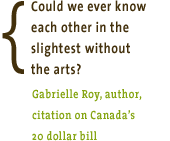
In the midst of Harper’s sniper fire at Canadian Arts and Culture, it is easy to forget that arts and the economy are greatly intertwined. See what I mean here and here and here. And especially here. Or maybe if you want a clear visual of the inseparable ties between the arts and the economy, just whip out your wallet. Find a twenty dollar bill and take a look at the back of it…

Harper and the Conservatives have created a black and white scenario where it’s arts and culture vs. the economy. This is typical conservative polarizing at its worst. But let’s pretend just for a moment that this is actually how life works… The Arts vs. The Economy… What would you choose? Actress Leah Pinsent, has this to say:

“We don’t visit Rome, Japan or Africa to learn about their economies. We go to experience their culture… It is culture, not economics, that truly makes a nation. If we as Canadians are left only with other people’s stories .. then what can we be proud of? There will be nothing left to be proud of…”

The only thing that Pinsent misses is that the arts are part and parcel of the Canadian economy. And yes, the economy should clearly be of paramount importance. But arts and culture – like every other industry – are entitled to be supported by the very government and country that they themselves support. Canadian music and theatre are no more part of a niche industry than the Ford auto plant in Windsor is. Pruner bluntly evokes the question that I’ve been pondering:

“Why is it we talk about investing in the auto sector, investing in the energy sector, and handouts to the arts? Are we tired of this? I think so.”

So while Harper would like you to believe that “ordinary folks don’t care about arts,” (his words) let’s stop pretending that arts and culture aren’t intermingled in the genetic makeup of Canada’s economic infrastructure. Let’s stop pretending that this is a black and white issue and that Harper’s already made the right choice for us. And while we’re at it, let’s stop pretending that there’s such thing as an “ordinary” Canadian. Because there isn’t, anymore than there’s such a definable thing as “Canadian arts” or “the Canadian economy.”

Mr. Harper: Canadian arts, the economy, and Canadians themselves are complex things, not reducible to single lines in a budget as you would have the electorate believe. Try expanding your mind a little.

Faceless for the Arts

Normally, I’m not one to jump on social cause bandwagons. I find that wristbands, ribbons, buttons, stickers, car magnets, and the such are often really more about making individuals feel good about themselves than enacting real change. If people really wanted to make a difference, they would get out of their cars and use their feet. But today, I joined a group on Facebook called “Faceless.” Along with that, I replaced my profile picture to an icon which states “Faceless for the Arts.” This is all a part of a campaign to protest the rapidly declining support of Canadian arts and culture by the federal government.

Before clicking on the “Join Group” button, I hesitated for a moment, but then realized that Facebook is actually the exact place where this type of protest should take place. It is an ironic paradox that our world has become increasingly interconnected, yet at the expense of actual face-time. One of the greatest realms that has been affected by this paradox is arts and culture. In Canada, our current government has decided that if artists want to connect with people, they should do so without any of the support they have traditionally enjoyed from the government. Arts and culture has become an increasingly isolated enterprise in Canada on the federal level, with a lack of recognition of its importance and centrality in our otherwise banal national identity.

The Conservative Party of Canada has shown a blatant contempt for the vitality of Canadian arts and culture. In two and a half years, the Conservative Government has eliminated over $34 Million in funding from Cultural and Heritage Granting Programs. The programs affected were designed to assist artists, arts institutions and not for profit charitable organizations in the creation, development, promotion and dissemination of Canadian art both nationally and internationally. And more cuts are anticipated in the coming weeks as part of Harper’s campaign.

So I joined a Facebook group and changed my picture. Sure, on its own, this measure is not going to make a concrete difference, it’s a symbol. But coupled with a thoughtful vote against the Conservatives in the upcoming elections, it’s more than just a symbol.

I hope and pray that people realize how serious these cuts are, and how they are part of a greater negative ideology on the part of the Conservatives. Things are changing in Canada, and the worst part is it’s not just about how we see ourselves. Just read what Slate has to say about us, in an article titled “What’s the Matter with Canada?”:

…Canada’s political system is in turmoil. Since 2004, a succession of unstable minority governments has led to a constant campaign frenzy, brutalizing Canada’s once-broad political consensus and producing a series of policies at odds with the country’s socially liberal, fiscally conservative identity. Canada is quietly becoming a political basket case, and this latest election may make things even worse.

Make no mistake, these policy changes and funding cuts are radically changing Canadian society.

Seething in an Apathy of Olympic Proportions

We’re getting closer to the start of the Olympics. Which means we’re getting closer to the start of my self-imposed boycott of anything Olympic-related. Here’s a rundown of what I’m (not) doing:

I won’t be watching the games or any of the related ceremonies.

I won’t be purchasing or using products/services from any of the Olympic sponsors.

I won’t be taking joy in Canadian or Israeli medal wins… as unlikely as they may be.

Why all this? This is no empty-threat, hippie bandwaggon protest of anything China-related. I have spent a lot of time thinking about the significance of how we personally relate to something like the Olympics, and I believe that corporations, governments, some celebrities, and a very select group of organizations can affect a tangible change. Outside of that, very few individuals can look forward to making a noticable difference. So I admit that my personal boycott isn’t going to have worldwide ripples. Even as part of larger boycotts, these protests won’t have the necessary politcal ramifications that I wish they could have. There’s just too much worlwide tether to China, and people don’t seem to want to bite the hand that feeds them… no matter how tainted the food is.

But I don’t eat foods that I think will disagree with my body, and I’m not going to injest any part of these games. I’m no apathetic cynic, and I’m not going to resign myself to sit back and let things be the way they are “just because.” I humbly suggest that you don’t either.

Here’s a short recap of why I’m taking a political stance on this one… As I noted a few months ago when I came to this decision, it’s based on a few personal realizations and decisions:

1. The olympics are inherently a political event. To suggest otherwise is nonsense. They were formed out of political motivation, and remain a nationalized institution. To that extent, they merit a political response.

2. It is fair to hold our athletes to a higher standard. I believe that the Canadian olympic team should have withdrawn from these games. By participating, they are making a tacit statement that protesting human rights violations and the neglect of civil, social, political, and labour justices takes a back seat to the advancement of personal goals. It’s just plain egotistical.

3. My tax dollars have gone to fund the Canadian team. This is not where I want my government money going.

Intriguingly, our Prime Minister has decided not to attend the Games, and will be joined in his absence by the British PM and German Chancellor. Also, since being elected in 2006, he hasn’t travelled to China, and has decreased our trading relationship with them. I’m no fan of the Conservatives, but the dude’s got it right.

Among all this talk of boycott, President Bush spoke up from his cave and said that a personal boycott “would be an affront to the Chinese people.” Nu? Isn’t that the point? China’s abuses are an affront to the world; the least we can do is step up in their faces. Props to Harper for at least getting that much into his head.

Outside of my mildly apathetic disdain, you can find a humourous look at these olympics, check out Dawn Ponders, who, among other things, has this to say:

…Let me get this straight – The Olympic Games are supposed to celebrate the best in sport and fitness and two of it’s major sponsors are McDonald’s and Coca Cola? Together, these two companies have added more inches to the waistlines of the world than any designer I can think of.